You steam the broccoli for four minutes, the water turns a faint green, and you pour it down the sink. That green is water-soluble vitamin C and a good chunk of the B vitamins leaving your dinner. It's one of the quietest losses in home cooking, and most of us do it every night without noticing.
Cooking is not a neutral act. Heat softens fibre and makes starch digestible, but it also degrades vitamins, leaches minerals into cooking water, and oxidises fats. The same carrot can deliver wildly different amounts of beta-carotene depending on whether you boil it for twenty minutes or roast it whole in its skin. Understanding how cooking methods affect nutrient retention is the difference between eating vegetables and actually absorbing what they contain.
Below I'll walk through what the science says, where the biggest losses happen, which techniques preserve the most, and why "raw is always better" is a rule that deserves to be broken more often than it's followed.
Key takeaways
- Boiling is the most destructive common method: up to 60% of vitamin C can be lost to leaching and heat.
- Steaming, microwaving and stir-frying preserve the most water-soluble vitamins because they limit contact with water and shorten cooking time.
- Some nutrients actually increase in availability after cooking — lycopene in tomatoes, beta-carotene in carrots, and iron in meat.
- Cut size matters more than people think: smaller pieces mean more surface area and faster leaching.
- Reheating leftovers can cost another 10–20% of heat-sensitive vitamins, so batch-cooking has a hidden nutritional price.
How cooking methods affect nutrients: the four forces at work
Every cooking technique exposes food to some combination of four stressors: heat, water, air and light. Each one attacks different nutrients at different rates, and the method you choose determines which stressor predominates.
Heat denatures proteins and destroys heat-labile vitamins — vitamin C is the most fragile, followed by folate and thiamine. Water dissolves water-soluble vitamins and minerals through a process called leaching. Oxygen drives oxidation, which is why a sliced avocado browns and why vitamin C degrades faster in cut produce. Light breaks down riboflavin and some pigments.
Water-soluble vs fat-soluble: a crucial distinction
The vitamins that suffer most from cooking are the water-soluble ones: vitamin C and the B complex (thiamine, riboflavin, niacin, B6, folate, B12). They dissolve into cooking water and degrade under heat. A 2018 study published in Food Science & Nutrition found that boiling spinach for ten minutes reduced its vitamin C content by roughly half.
Fat-soluble vitamins — A, D, E and K — are far more heat-stable. They survive boiling, roasting and frying with modest losses, though they can be damaged by prolonged high-heat exposure or oxidation. The bigger risk for these vitamins is that they need fat to be absorbed at all; a fat-free salad dressing on your carrots means you're absorbing less beta-carotene regardless of how gently you cooked them.
Minerals are a different story. They don't degrade with heat, but they leach. Calcium, potassium, magnesium and iron all migrate into cooking water, particularly when the water is acidic or the cooking time is long. That's why the broth from a stew is nutritionally valuable — and why tossing it away is a small act of waste.
What cooking method destroys the most nutrients?
Boiling wins the dubious prize. Immersing vegetables in a large volume of water at 100°C triggers the maximum double hit: heat degradation and leaching simultaneously. Research consistently shows boiling can destroy 50–60% of vitamin C in vegetables like broccoli, and a significant share of folate and thiamine too.
There's a simple reason. When vegetables sit in water, the concentration gradient pushes water-soluble molecules out of the cells and into the surrounding liquid. The longer they sit, the more they leak. An overcooked, waterlogged vegetable is essentially a nutritional husk.
How boiling compares to other methods
Here's what the evidence suggests for vitamin C retention in green vegetables, based on published food science data:
| Cooking method | Approximate vitamin C retention | Main loss mechanism |
|---|---|---|
| Boiling (large water volume) | 40–55% | Leaching + heat |
| Boiling (minimal water) | 55–70% | Heat |
| Steaming | 70–85% | Heat only |
| Microwaving (with 1–2 tbsp water) | 75–90% | Heat only, short duration |
| Stir-frying | 70–80% | Heat, limited by short time |
| Roasting | 60–70% | Heat, longer duration |
| Pressure cooking | 65–80% | Short time offsets higher temperature |
A caveat: these figures vary widely depending on cut size, cooking duration, water pH, and whether the vegetable is whole or chopped. But the ranking of methods is remarkably consistent across studies.
Which cooking technique retains the most nutrients?
Steaming and microwaving are the two top performers, and it's not close. Both avoid the leaching problem because the food never sits submerged. Both are fast, which limits heat exposure. And both are gentle enough to preserve most of the water-soluble vitamins that boiling washes away.
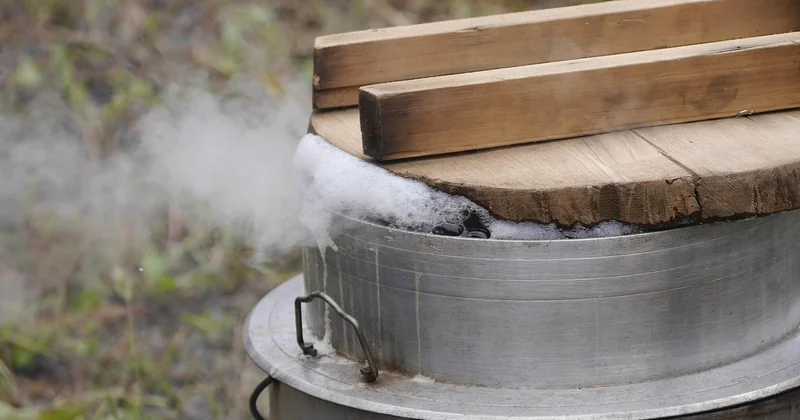
Steaming consistently retains 70–85% of vitamin C and most B vitamins in vegetables like broccoli, spinach and green beans. Microwaving performs just as well — sometimes better — because the cooking time is even shorter. The persistent myth that microwaves "destroy nutrients" is precisely backwards: the microwave is one of the most nutrient-preserving tools in your kitchen.
Why the microwave deserves a better reputation
Microwave cooking uses electromagnetic radiation to excite water molecules in the food, generating heat internally and very quickly. Because the cooking time is short and the method typically calls for only a splash of water, both heat degradation and leaching are minimised.
The catch is that many people microwave on high for too long, or cover vegetables in a pool of water "to be safe." That undoes the advantage. Use just a tablespoon or two of water, cover the dish, and cook in short bursts. The vegetables should come out bright and slightly firm, not limp.
Steaming does the same job with a stovetop and a basket. It's my default for green vegetables. A few minutes is enough for broccoli to turn vivid green and stay crisp. If it turns olive-drab, you've gone too far.
When cooking actually boosts nutritional value
Here's the part the "raw is best" crowd tends to skip. Some nutrients become significantly more available after cooking, not less. That's because heat breaks down cell walls and liberates compounds that would otherwise pass through your digestive tract untouched.
Lycopene and beta-carotene: the cooking paradox
Lycopene, the red pigment in tomatoes, is bound in the plant's cell matrix. Cooking releases it. Studies show that tomato sauce and tomato paste contain more bioavailable lycopene than raw tomatoes — and tomato paste in particular has a lycopene concentration several times higher than the fresh fruit by weight, because the water has been removed.
Beta-carotene in carrots behaves similarly. Cooking carrots — especially with a little fat — increases the amount of provitamin A your body can actually absorb. Roasting carrots whole keeps more of their nutrients than boiling them in cubes, because the intact skin slows leaching.
Cooking and meat: iron, protein and the maillard effect
Does cooking destroy nutrients in meat? It depends on the nutrient. Protein is largely unaffected by normal cooking; the amino acids are too robust to be meaningfully degraded at culinary temperatures. Iron actually becomes more available in meat after cooking because the protein structure unfolds, exposing the mineral for absorption.
The Maillard reaction — that browning on the surface of seared meat — produces hundreds of flavour compounds. It also produces some compounds that are less welcome (heterocyclic amines, when meat is charred at very high heat). The practical rule: moderate heat, moderate browning, and don't let the pan smoke.
A practical strategy for your kitchen
You don't need to memorise a nutrient-retention table to cook well. A handful of habits covers most of what matters.
- Steam or microwave green vegetables whenever you want maximum vitamin retention. Reserve boiling for soups and stews where you drink the liquid.
- Cut vegetables larger than you think you should. Halved carrots retain more than diced ones; whole potatoes retain more than cubed.
- Add fat to fat-soluble dishes. A drizzle of olive oil on your carrots or tomatoes dramatically improves lycopene and beta-carotene absorption.
- Keep cooking times short — al dente, not tender. Every extra minute costs vitamins.
- Don't discard cooking liquid from soups, stews or blanching if you can help it — it contains the minerals and vitamins that leached out.
- Leave the skin on when you can. It slows the migration of water-soluble nutrients.
- Reheat once, not three times. Repeated heating cycles compound nutrient loss.
If you cook a vegetable soup or a stew, boiling is defensible because you consume the broth. The leaching that damages boiled vegetables on a plate becomes a feature when the cooking water ends up in your bowl. That's why soup can actually be a nutrient-dense meal despite using a "destructive" technique.
One habit I've adopted: I keep a small container of cooking liquid from blanched spinach and use it as the base for a quick soup later in the week. It tastes good and it means the water-soluble nutrients don't go down the drain.
What this means for the way you cook
The question of how cooking methods affect nutrient retention has a simple answer at its core: heat is not the enemy; water and time are. Cook hot, cook fast, use as little water as you can, and add fat where it helps. That's most of it.
But the deeper lesson is that no single technique is universally best. Boiling destroys vitamin C, yet it makes starchy foods more digestible and produces broths rich in minerals. Roasting costs some vitamins but boosts lycopene and beta-carotene. Raw food preserves vitamin C but reduces the availability of several fat-soluble compounds.
The most useful question isn't "which method is healthiest." It's "which method is right for this ingredient, in this dish, for this meal." A tomato sauce and a raw tomato salad are both good for you — for different reasons. Learning to think in those terms will do more for your nutrition than any single rule about cooking.
So the next time you're standing at the stove, watching the green leach out of your broccoli, remember: it's not too late to save the water for a soup. Or to switch to the steamer. Or to eat the broccoli raw with a drizzle of good olive oil. All three work. The one that doesn't is dumping the water and calling it a day.