
You're halfway through a recipe when you realize the heavy cream is gone. Or the baking soda. Or—worse—the eggs. What happens next separates cooks who panic from cooks who just keep going.
The good news: most missing ingredients have a solid stand-in already sitting in your kitchen. The best substitutes for common cooking ingredients aren't exotic or expensive. They're the yogurt in your fridge, the lemon in the fruit bowl, the cornstarch in the back of the cupboard. You just need to know the ratios and, more importantly, when a swap works and when it quietly ruins the dish.
I learned this the hard way. Early on, I treated every substitution as a 1:1 trade. I swapped baking soda for baking powder in a batch of cookies, used the same amount, and ended up with flat, pale discs that tasted faintly of soap. That failure taught me more than any chart ever could: the amount matters as much as the ingredient.
Key Takeaways
- Eggs, dairy, leavening agents, and acids cover roughly 80% of emergency substitutions in a normal kitchen.
- Baking is chemistry: swaps that work in a stew can destroy a cake. Treat sweet and savory separately.
- Always adjust for liquid. A yogurt-for-cream swap is 1:1, but a milk-plus-lemon swap needs a 5-minute rest before use.
- Baking powder and baking soda are not interchangeable without a compensating acid.
- When a substitute fails, it's usually texture—not flavor—that gives it away.
Common cooking substitutes that actually work (and the ratios)
Most ingredient substitution lists are qualitative: "use yogurt instead of cream." Fine. But how much? Does it change the liquid? Will it split when heated? Those details decide whether dinner succeeds.
Here's what I keep pinned above my counter—the swaps I've tested repeatedly and trust.
Dairy and fat substitutes
Heavy cream is the one people miss most, because it does two jobs at once: richness and structure. For sauces and soups, whole milk plus melted butter gets you close—about 3 parts milk to 1 part butter by volume. It won't whip, though. If you need whipped cream, full-fat coconut milk (chilled, solids only) is your best bet, and it holds peaks for roughly 20 minutes before it starts to weep.
- Buttermilk: 1 tablespoon lemon juice or vinegar + enough milk to reach 1 cup. Let it sit 5–10 minutes until it looks slightly curdled.
- Sour cream: Plain Greek yogurt, 1:1. It's thicker, so thin it with a splash of milk for dips.
- Butter (in baking): Neutral oil at about ¾ the volume. Your texture will be moister but less flaky.
- Half-and-half instead of cream? Works in soup, fails in a reduction—it splits.
Egg substitutes and when they betray you
For binding—meatballs, veggie burgers—a "flax egg" does the job: 1 tablespoon ground flaxseed plus 3 tablespoons water, rested 5 minutes. For leavening in cakes, it does not. I tried a flax egg in a sponge cake once and got something closer to a dense brownie. Edible. Not what I wanted.
What works reliably in baking: ¼ cup applesauce or mashed banana per egg for moisture, or 3 tablespoons aquafaba (the liquid from a can of chickpeas) whipped for structure. Aquafaba meringues genuinely surprised me the first time—they held their shape in a low oven.
What are some common substitutes for cooking ingredients?
The short answer: eggs, dairy, leavening agents, acids, and sweeteners account for nearly every substitution you'll ever need. Each one behaves differently depending on whether you're cooking savory food or baking.

For acids, lemon juice and white vinegar are close enough to swap in dressings and marinades—use about ¾ the amount of vinegar, since it's sharper. For sweeteners, honey can replace sugar at roughly ¾ cup per cup, but reduce your liquid by about 2 tablespoons and drop the oven temperature by 25°F, because honey browns faster than sugar.
Here's the comparison I wish I'd had years ago:
| Missing ingredient | Substitute | Ratio | Watch out for |
|---|---|---|---|
| 1 cup buttermilk | Milk + lemon juice | 1 tbsp acid + milk to 1 cup | Rest 5–10 min before using |
| 1 tsp baking powder | Baking soda + cream of tartar | ¼ tsp soda + ½ tsp cream of tartar | Mix fresh; it loses lift fast |
| 1 cup heavy cream (sauce) | Milk + butter | ¾ cup milk + ¼ cup butter | Won't whip; may split if boiled hard |
| 1 egg (binding) | Flax egg | 1 tbsp ground flax + 3 tbsp water | Not for leavening |
| 1 cup sugar | Honey | ¾ cup honey | Lower oven 25°F, cut liquid |
What's a good substitute for cooking?
This question usually means something broader: what do you reach for when an ingredient—or the whole technique—isn't available? The honest answer is that technique often substitutes better than any single ingredient.
No wine for a pan sauce? A splash of stock with a teaspoon of vinegar deglazes just as well. Missing fresh herbs? Dried herbs work at about one-third the volume, added earlier so they hydrate. Out of garlic? A pinch of asafoetida or the white part of a leek gives a similar background note, though it's not identical.
There's a pattern here, and it took me a while to see it: a substitute is really just a way to replace a function—acidity, fat, lift, moisture—not a flavor. Once you start thinking in functions, you stop needing a chart at all. You look at what the ingredient is doing and find something else that does the same job.
What is the 5 ingredient rule?
It's a cooking principle, not a law, and it's less rigid than it sounds. The idea is that a dish built from around five ingredients—not counting salt, pepper, and fat—stays focused and lets each component be tasted. It's the logic behind a lot of home cooking and the reason some of the best meals are the simplest.
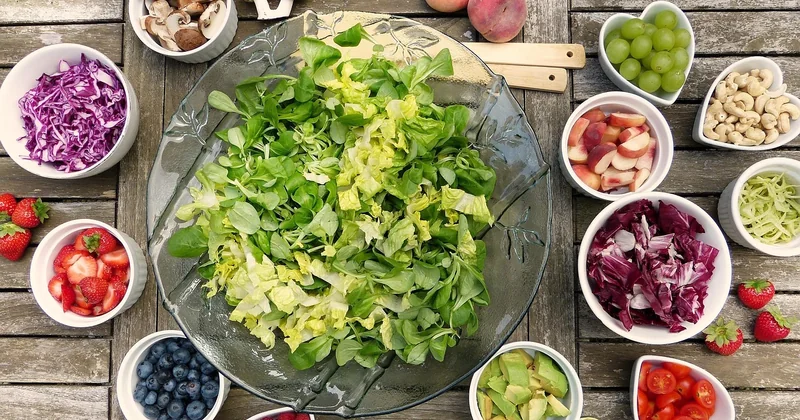
I lean on it more than I expected. When I stopped trying to fit nine ingredients into a weeknight pasta, my cooking got faster and, frankly, better. Five ingredients force you to pick a direction instead of hedging.
It's also a useful lens for substitutions. If you're swapping out one ingredient in a five-ingredient dish, you're changing 20% of the recipe—so the substitute has to carry real weight. In a fifteen-ingredient stew, a swap is barely noticeable.
Best substitutes for common cooking ingredients in baking
Baking is where substitutions get dangerous. Sugar doesn't just sweeten—it tenderizes and helps browning. Eggs don't just bind—they trap air. Change one, and you've changed the structure.
What can you use instead of baking soda and baking powder?
These two are the most confused pair in the kitchen, and confusing them is expensive. Baking soda is pure sodium bicarbonate and needs an acid to react. Baking powder already contains an acid, so it works alone.
Out of baking powder? Combine ¼ teaspoon baking soda with ½ teaspoon cream of tartar per teaspoon needed. Out of baking soda? You can't cleanly substitute baking powder—you'd need roughly three times as much, which throws off the acid balance and can leave a metallic taste. Better to pick a different recipe.
The traps that catch everyone
- Self-rising flour: 1 cup all-purpose + 1½ tsp baking powder + ¼ tsp salt. Don't add extra leavening to the recipe.
- Brown sugar: 1 cup white sugar + 1 tbsp molasses. Mix it; don't just stir once.
- Cornstarch instead of flour as a thickener? Use half the amount—it's roughly twice as powerful, and it turns cloudy in acidic sauces.
- Milk chocolate for dark? Add a tablespoon of cocoa per 3 ounces to pull the sweetness back down.
One more thing worth saying plainly: flavor substitutes are forgiving, texture substitutes are not. If a cake comes out dense or a sauce breaks, the culprit is almost always moisture or structure, not taste. Adjust the liquid before you adjust the flavoring.
What are common cooking ingredients?
The everyday core is smaller than most pantry shelves suggest. Flour, sugar, salt, eggs, butter or oil, milk, rice, pasta, onions, garlic, tomatoes, and a handful of acids and leaveners cover the vast majority of home recipes—and conveniently, they're also the ingredients people run out of most.
That overlap is why a short substitution list beats a long one. You don't need fifty swaps; you need the ten that rescue the twenty ingredients you actually cook with.
Test one swap at a time. Change too many variables at once and you'll never know which substitution saved the dish—or which one sank it. And keep a pen near the stove. The substitutions you figure out on a Tuesday night are worth writing down, because you'll need them again.