Somewhere in your kitchen right now, there's a small jar of something that once launched fleets, toppled local monopolies, and convinced European kings to mortgage their treasuries. Nutmeg. Pepper. Cloves. You bought it for a few euros, maybe less. Nobody died getting it to your supermarket shelf.
That convenience is recent. For thousands of years, the trade in spices was the single most profitable long-distance commerce on Earth, and the routes those spices travelled built much of the modern world's map. Ports became cities, cities became empires, and empires fought over islands you'd struggle to find on a globe today. The story of how spices shaped global trade routes is really the story of globalisation's first draft. And it's a better story than most history books let on.
Key takeaways
- Spice routes were among the first truly intercontinental supply chains, connecting Southeast Asia to the Mediterranean long before the Silk Road carried silk.
- The reason spices were so valuable wasn't flavour alone: distance, middlemen, and deliberate obscurity all inflated the price at each border.
- Vasco da Gama's sea route around the Cape in 1498 didn't just cut costs — it broke a centuries-old monopoly and shifted the world's economic centre of gravity.
- Pepper remains the most widely traded spice by volume, while India leads global spice production by a wide margin.
- Most of the "exotic" mystique around spices was manufactured by traders protecting their margins. Sound familiar?
How spices built the first global supply chain
Before anyone thought to draw a line on a map connecting a nutmeg island to a Venetian kitchen, the spice trade already had a rhythm. Austronesian sailors were crossing stretches of the Indian Ocean toward Sri Lanka and the Indian coast well over three thousand years ago, hauling cinnamon, cassia, and cardamom. That's the part that always surprises people: the maritime spice network predates the Silk Road by centuries, and it was already global in reach.
The routes ran roughly like this. Growers in the Maluku Islands, the so-called Spice Islands, harvested nutmeg, mace, and cloves. Local rulers controlled those islands tightly, and the point of that control was monopoly. From there, goods passed to Indian and Arab merchants, then by land and sea through the Persian Gulf or the Red Sea, then overland to Alexandria or Constantinople, then finally into the hands of Venetian and Genoese traders who sold to the rest of Europe.
Why did the spice trade matter so much?
Simple: every hand that touched a peppercorn added a markup. A sack of pepper might double or triple in price at each stage, so by the time it reached a medieval European kitchen the cost bore no relation to the work of growing it. That gap is where the profit lived, and everyone positioned along the chain wanted a piece.
The Arab merchants had a further trick. To hide where spices actually came from, they spun stories. The most famous is the tale of the cinnamologus, a giant bird that built its nest with cinnamon sticks and had to be lured out with heavy chunks of meat. The sticks would fall, and that's where cinnamon came from. Absurd? Yes. But effective — nobody could sail off and find the source if they thought it lived in the clouds.
Spice route vs Silk Road: are they the same thing?
No, and the confusion is common. The Silk Road is the umbrella term for the overland caravan network linking China to the Mediterranean. The spice route was its maritime cousin — a sea-and-land web that ran from Southeast Asia through India and the Arabian Peninsula to Europe. The two overlapped in Central Asia and India, and in practice merchants traded both silk and spice along either network. If you want a mental image, picture the Silk Road as the land artery and the spice route as the seafaring one. The spice route moved more weight, because you can float a crate of peppercorns in a ship's hold far cheaper than you can drag it across a desert on camelback.
What are the historical routes and patterns of the spice trade?
The pattern to grasp is this: for centuries, one power at a time sat at the chokepoint, and whoever controlled the chokepoint controlled the price. During the Roman era, spices arrived via Egyptian ports on the Red Sea, and Roman demand was heavy — pepper imports were substantial enough that Pliny the Elder complained about gold draining eastward to pay for it. Later, Venice cornered the entry into Europe. After 1498, Portugal tried to replace that chokehold with its own, taking Malacca in 1511 for exactly that reason. Then the Dutch East India Company (the VOC) took over the Moluccas and, in the 1600s, founded Batavia as a base. Each shift didn't change which spices were grown — it changed who got to profit from moving them.
The moment the map flipped
When Vasco da Gama rounded the Cape of Good Hope in 1498, he didn't just find a new route. He found a way to skip almost every intermediary. A cargo that once cost Lisbon merchants a king's ransom in Venetian markups could now be bought closer to source. Prices didn't crater overnight — the Portuguese had to fight to hold the route — but the structural advantage of sitting at the old chokepoints evaporated. Rival cities rose and old ones felt the pinch. Few things reshape trade as fast as a route that suddenly shortens.
How did the spice trade impact the world?
More than most people realise. It funded exploration, and exploring for spices meant mapping the coastline of Africa and the sea lanes of Asia. It produced some of the first large trading companies with shareholders and legal monopolies, which became templates for how corporations are still structured. It created port cities that remain economic hubs today: Malacca, Cochin, Batavia (now Jakarta). It even reshaped the food habit of nations — the reason your curry, your pumpkin pie, and your mulled wine taste the way they do all trace back to centuries of spice movement.
However, there's a darker side. Spice monopolies were enforced with violence. The VOC famously burned surplus nutmeg to keep prices high and used force to keep the Maluku Islands under control. Traders who tried to smuggle or undercut the monopoly risked harsh punishment. It's uncomfortable to sit with, but the profit that built these trade routes came from coercion as much as from enterprise.
What is the world's most commonly traded spice?
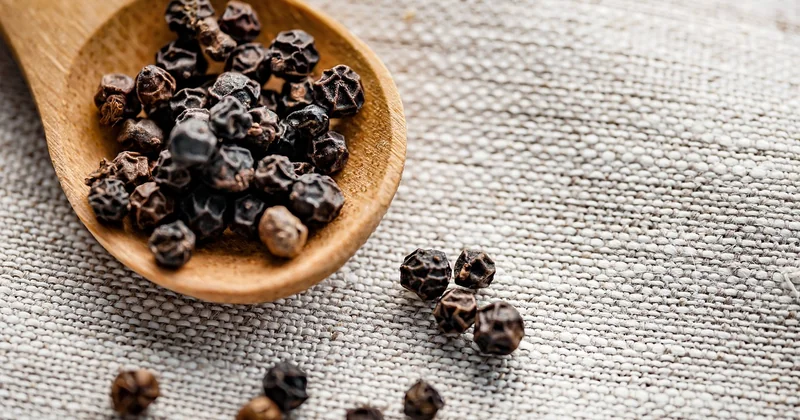
Pepper. It has held that position for a very long time, and it's hard to see anyone displacing it. The reason is straightforward: pepper is the workhorse of global cooking. It's cheap to grow, easy to transport, and used in almost every cuisine on the planet. Where saffron can cost more per gram than gold and stays in a niche, pepper moves in bulk, year after year, across every trade lane that matters. Its sheer volume is why it anchored the trade for millennia — and why a bag of it costs you almost nothing today.
Which country is no. 1 in spice production?
India. It grows and exports more spices than any other country by a wide margin, from black pepper to turmeric, cumin, cardamom, and chilli. That's not new either — the Indian subcontinent was the beating heart of the spice trade long before Europeans showed up, and it has stayed a central producer ever since. Other countries are major players in specific crops (Indonesia for nutmeg and cloves, Vietnam for pepper volume, Spain for saffron), but when you total everything up, India remains the top global producer.
What this means for you
Next time you grind pepper over a plate, picture the chain that used to exist for it: Moluccan farmers, Indian brokers, Arab shippers, Venetian merchants, each taking a cut. What survives from that world is not romance — it's the structure. Chokepoints still decide who profits. Middlemen still profit from obscurity. And the moment a faster route appears, entire economic regions realign. The spice routes didn't just move spices. They taught the world how to grow rich by moving things across it. That lesson hasn't aged a day.