Walk into any pizzeria in Naples and ask the person behind the counter when pizza was invented. You'll get a shrug, then a number that sounds suspiciously rounded. Ask the same question in Rome or New York and the answers swing wildly. Somewhere between those two reactions sits the real story: pizza didn't spring from one inventor's mind but crawled out of centuries of flatbreads, hunger, politics and a surprising amount of flour.
The origin story of pizza and how it evolved is one of the messiest in food history. It involves Roman soldiers, a queen, and a wave of immigrants who brought a working-class street snack to cities that didn't know what to do with it at first. Let me walk you through what actually happened, and where the popular version of the story gets things wrong.
Key Takeaways
- Flatbreads with toppings existed across the ancient Mediterranean, long before anyone wrote down the word "pizza".
- Modern pizza was born in Naples as cheap food for the working poor, not as a delicacy.
- The word's first documented appearances date to the 16th century, but the dish we recognize is younger.
- Pizza arrived in the United States with Italian immigrants and only went mainstream after American soldiers came back from Italy.
- Pizza did not come from China. The flatbread overlap is real, but the lineage is Mediterranean.
- Every regional style you love (deep dish, Neapolitan, New York slice) came from the same dough and different constraints.
Pizza evolution: from flatbread to global staple
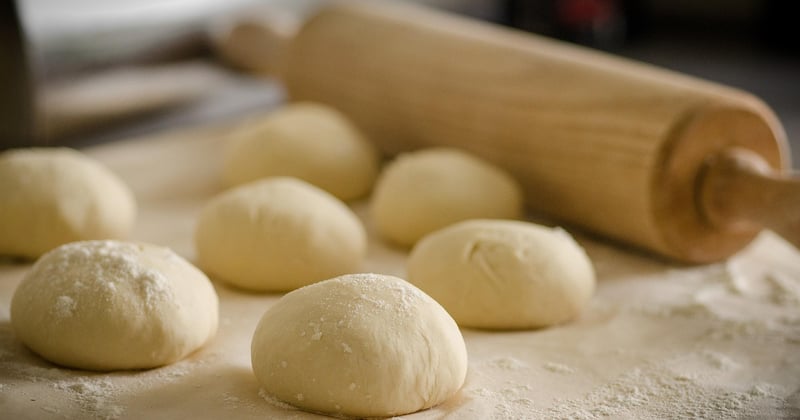
The very first pizza-like thing you'd recognize wasn't a pizza. It was a round of flattened dough cooked on a stone, then topped with whatever was cheap and available. That's it. That's the whole starting point.
In the Mediterranean, this pattern shows up again and again. Roman soldiers reportedly baked dough on their shields over open fires and added cheese and olives. The Greeks had plakous. The Egyptians, Persians, and later the Turks all had their own versions. None of them called it pizza because the word didn't exist yet.
What did pizza look like when it was first invented?
Picture something between a pita and a focaccia. A pale, uneven disc of dough, blistered from a wood fire, with a thin layer of whatever fat or topping was on hand. No tomato. Tomatoes didn't reach Europe until the Columbian exchange of the 16th century, and for another two hundred years Europeans assumed they were poisonous.
The first pizzas were closer to a savory flatbread than the blistered, sauce-covered disc you picture today. Think anchovies, garlic, lard, herbs. The tomatoes came later, and when they arrived, they changed everything.
Is pizza originally from Italy or China?
Italy. This one matters because the "pizza came from China" idea keeps resurfacing, usually with a mention of Marco Polo. The story goes that Polo brought back a Chinese flatbread called congyoubing and Italian cooks adapted it. It's a nice story. It also has about as much evidence as a rumor passed around a dinner table.
The real answer is simpler and less cinematic: pizza developed independently across the Mediterranean as a way to bake flour and water over a fire. That method was common to half the ancient world, and China developed its own flour-based breads in parallel. Similar ingredients and techniques, different lineage.
How has pizza changed or evolved over time?
In three major phases, and each one reshaped what pizza actually was:
- Ancient flatbreads — dough plus toppings, cooked on stone. No word for it, no recipe, no expectation.
- Naples in the 1700s — pizza becomes a defined dish for the urban poor. Cheap, fast, eaten standing up.
- The 20th century — pizza leaves Europe, gets mass-produced, gets exported back, and fragments into a dozen regional styles.
Each phase added something the previous one didn't have: a name, a recipe, a delivery mechanism. The tomato arrived in phase two. Refrigeration and gas ovens arrived in phase three. The dough barely changed the whole time.
Why Naples, of all places, produced modern pizza
For most of the 1700s, Naples was one of the largest and poorest cities in Europe. It had a huge working population with almost no kitchen access, a lot of flour, and the best tomatoes in the region. It also had a small army of street vendors who could sell hot food for a few coins.
Pizza fit all of that perfectly. It was cheap to make, fast to cook, and you could eat it with your hands on the way to work. By the late 1700s, travelers passing through Naples were already writing about it. One notable visitor, the writer Alexandre Dumas, described the pizza of Naples in terms that would make a modern food critic wince—he was not impressed by the topping choices.
The Margherita story you've probably heard
In 1889, according to the story that most Italians now repeat at the dinner table, the Neapolitan pizzaiolo Raffaele Esposito was asked to prepare pizzas for Queen Margherita of Savoy. He made three. The queen liked the one with tomato, mozzarella and basil, allegedly because it echoed the colors of the Italian flag. He named it after her.
Most food historians treat this story with polite skepticism. The timing is suspicious, the documentation is thin, and the patriotic color symbolism is a bit too neat. But it did something real: it gave pizza a noble ancestor, a story, and a hook. You can argue with the legend. You can't argue with what it did for pizza's reputation.
History of pizza in America
Pizza landed in the United States with Italian immigrants in the late 1800s and early 1900s, mostly in cities with large Italian communities: New York, New Haven, Chicago, Trenton, San Francisco. For the first few decades, it stayed inside those neighborhoods. It was immigrant food, sold to immigrants, and the rest of the country didn't care.
The turning point wasn't an advertising campaign. It was World War II. American soldiers stationed in Italy ate pizza locally, liked it, and came home looking for it. Pizzerias opened outside Italian neighborhoods to meet demand. By the 1950s, pizza had become a novelty food. By the 1970s, it was a fixture.
Then the chains arrived. And here's where it gets interesting—chain pizza didn't replace regional styles, it created new ones. Deep dish in Chicago. Thin crust in St. Louis. The square-cut "tavern style" in the Midwest. The New York slice, still the benchmark, still fought over by people who have never baked a pizza in their lives.
When did the first American pizzeria open?
Lombardi's in New York, in 1905, is the name most often cited as the first licensed pizzeria in the United States. Whether it was literally the first is nearly impossible to prove—immigrant neighborhoods had dozens of informal ovens operating before any license was filed. But it's the first with paperwork, and in history, paperwork wins.
History of pizza timeline
Here's the short version, without the legends padding it out:
| Period | What happened |
|---|---|
| Ancient world | Flatbreads topped with oil, herbs, cheese across the Mediterranean |
| 16th century | Tomatoes arrive in Europe from the Americas |
| 16th–17th century | "Pizza" appears in Italian written records as a generic word for a flatbread |
| 18th century | Naples develops the modern pizza as street food for the working class |
| 1889 | The Margherita legend is born at Esposito's oven |
| 1905 | Lombardi's opens in New York |
| 1940s–1950s | Returning US soldiers drive mainstream demand outside Italian neighborhoods |
| 1960s–1980s | Chain pizza, regional American styles, frozen pizza |
| 2010s–present | Neapolitan pizza gains protected status; wood-fired ovens and high-hydration doughs become a craft |
One thing that gets lost in timelines: the actual technique barely moved for two hundred years. The dough, the wood fire, the fast bake at high heat—all of that was already in place in Naples by 1800. What changed was who was eating it.
What pizza history actually teaches you about food
Here's the angle that rarely makes it into the standard version of the story. Pizza didn't spread because it was good. It spread because it was cheap, fast, and portable. Those three properties made it a working-class meal in Naples, an immigrant meal in New York, and eventually a global default.
Every time someone tried to elevate it, the attempt failed or fractured. The Margherita legend gave it nobility, but nobody actually eats pizza because a queen liked it. They eat it because it fits the constraints of a real day. That's the same reason it's now the most default takeout food in dozens of countries—not because anyone decided it should be, but because it kept being the easiest answer to a hungry question.
So next time someone asks whether pizza is Italian or Chinese, or whether a certain topping is authentic, you have a better answer. The dough is Mediterranean. The tomato is American. The word is Italian. The popularity is a side effect of survival. And the whole thing is still being rewritten in someone's kitchen right now, one opinionated crust at a time.