Order orecchiette alle cime di rapa in a trattoria in Bari and you get something that tastes like it could only exist there: bitter turnip tops, anchovy, a slick of olive oil, and those little ear-shaped pasta dragging everything along. Order the same dish in Milan and it's fine. Correct. Forgettable. Same recipe, different place, and somehow the plate loses its argument.
That gap is what makes regional Italian pasta dishes so interesting. Italy doesn't have one pasta tradition. It has dozens, each shaped by what grew nearby, what the local economy could afford, and who happened to be ruling the area a few centuries ago. You can read the whole history of the peninsula through a bowl of noodles — if you know what to look for.
This isn't a checklist of shapes. It's about why the shapes exist, where the dishes came from, and which origin stories are actually true.
Key takeaways
- Most Italian pasta dishes are peasant inventions built on two or three local ingredients, not on elaborate technique.
- The North/South split is real but often overstated: eggs and butter up north, durum wheat and olive oil down south — with plenty of exceptions.
- Dried pasta as a commercial product is a Southern Italian and Sicilian story, and it's older than most people assume.
- The shape is designed for the sauce. Change the shape and you change the dish, not just the look.
- Most "ancient" origin legends attached to famous dishes were assembled in the 19th or 20th century.
Why Italian pasta changes every fifty kilometers
Geography, mostly. Then money, then politics.
The southern regions — Puglia, Campania, Sicily, Calabria, Basilicata — sit in a climate that grows durum wheat well. Durum semolina gives you a tough, elastic dough that holds up to drying and travels. And the south was poor for a very long time. For most families, meat was a Sunday event. So the pasta carried the meal, and the sauce had to be built from what was cheap and abundant: olive oil, garlic, anchovies, tomatoes, wild greens, dried chili, stale bread.
Head north and the logic flips. Emilia-Romagna, Piedmont, Lombardy, Veneto: colder, wetter, better suited to cattle and dairy. Eggs were available, butter was available, and fresh egg pasta became the default. The sauces turned rich — ragù, cream, butter and sage, Parmigiano — because those were the things the land produced.
Here's the part that gets lost: that's a broad pattern, not a rulebook. Liguria is northern and eats pesto made with olive oil. Naples is southern and its ragù cooks for hours. I once spent an afternoon arguing with a Bolognese friend who insisted egg pasta in the south "doesn't count" — as if anyone were keeping score.
What are some popular regional pasta dishes in Italy?
The ones that travel best are the ones with the simplest logic: orecchiette alle cime di rapa from Puglia, cacio e pepe and amatriciana from Lazio, pesto alla genovese from Liguria, ragù alla bolognese from Emilia-Romagna, pasta alla norma from Sicily, trofie with pesto again, spaghetti alle vongole from Campania, pizzoccheri from Lombardy's Valtellina. Notice that almost all of them contain three ingredients or fewer at their core.
Southern Italian pasta dishes and their origins
The south is where the world's idea of "Italian pasta" was actually invented — and it wasn't a culinary decision. It was an industrial one.
The dried pasta revolution
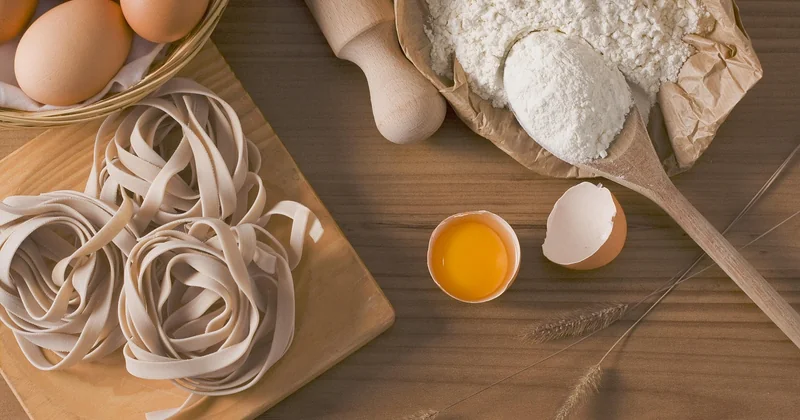
Sicily had a documented pasta-making trade long before the rest of Europe caught up, and the island's dry climate was perfect for air-drying. By the nineteenth century, Naples had turned pasta into a mass-produced food, with large pastifici hanging long strands out to dry in the streets of the city. That's the moment pasta stopped being a regional product and started being a national one.
Which brings up an obvious myth to kill: Marco Polo did not bring pasta to Italy from China. Dried pasta was already established in the Mediterranean well before his travels.
Three southern classics, and where they come from
- Amatriciana — named for Amatrice, a town in the Lazio hills near the border with Abruzzo. The original version is white: guanciale, pecorino, no tomato. The tomato arrived later, and the town still argues about it.
- Cacio e pepe — Rome's simplest dish and its hardest to execute. Pecorino Romano and black pepper, emulsified with pasta water. No cream, ever. If a restaurant in Rome serves it creamy and loose, walk away.
- Pasta alla Norma — Catania's signature: fried aubergine, tomato, salted ricotta. The name comes from Bellini's opera, which tells you something about how these dishes got their labels — often decades or centuries after people started eating them.
Notice what all three have in common: a hard cheese, a cured pork or a vegetable, and pasta water doing the work of a sauce. That's the southern grammar.
Northern Italian pasta dishes: eggs, butter and mountain food
Ask someone from Emilia-Romagna about pasta and they'll start talking about eggs per kilo of flour. That ratio is a point of pride in a way that has no southern equivalent.
Fresh egg pasta territory
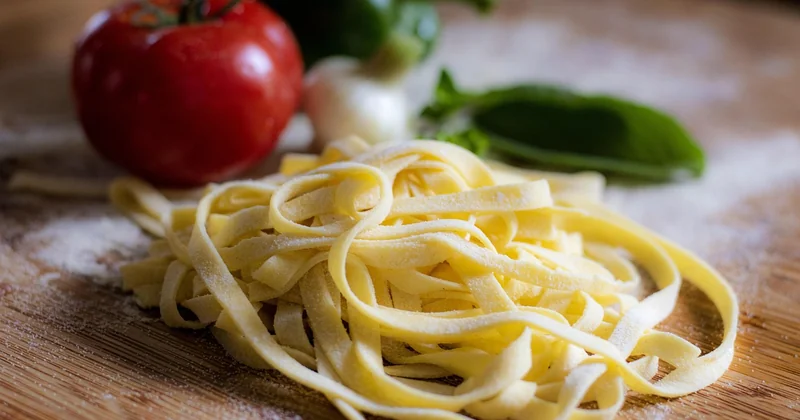
Tagliatelle al ragù is the emblem. Not spaghetti bolognese — tagliatelle, wide ribbons, because the ragù needs surface area and the egg pasta needs a sauce with fat in it. The ragù itself is a slow-cooked soffritto of carrot, celery and onion with beef and pork, a splash of wine, a little tomato. Nothing dramatic. The technique is patience.
Piedmont gives you tajarin, egg-rich ribbons served with butter and truffle. Lombardy's Valtellina gives you pizzoccheri, buckwheat short noodles layered with cabbage, potato, butter and cheese — food designed to keep you alive in a mountain winter. Veneto has bigoli, a thick wholewheat noodle traditionally made with a press, often served with duck ragù.
The shape matches the sauce
This is the rule newcomers underestimate. Orecchiette have a cupped shape that traps the bitter greens. Rigatoni have ridges and a wide bore for chunky sauces. Trofie are twisted so pesto clings to the coils. Spaghetti work for oil-based sauces that coat rather than pool.
Cook a delicate sauce with a heavy shape and the dish collapses. I learned this the hard way early on, serving a light clam sauce with bucatini. It was like drinking soup with a fork. Total waste of good clams.
What are some examples of regional Italian cuisine beyond pasta?
Pasta is the entry point, but the regional logic runs through everything. Consider risotto alla milanese in Lombardy, colored with saffron. Bagna cauda in Piedmont, an anchovy and garlic dip for raw vegetables. Caponata in Sicily, sweet-and-sour aubergine. Porchetta in Lazio, whole roast pig seasoned with rosemary and fennel.
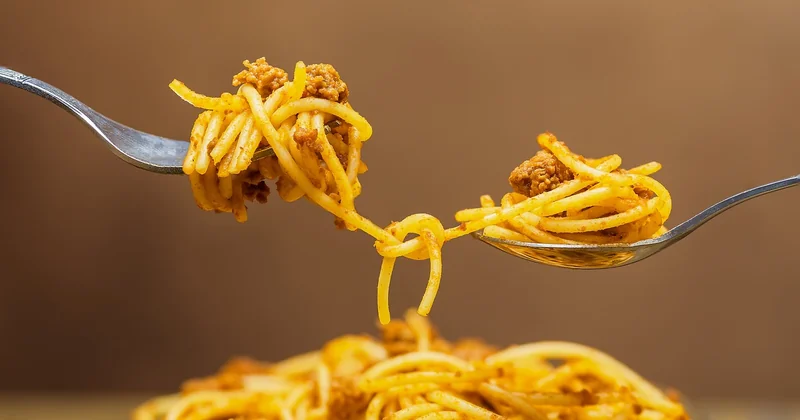
The pattern holds: each region builds from its own landscape, and each dish tells you what was cheap and what was scarce. That's why Italian food travels less well than, say, French cuisine — it's built to be eaten where it's made.
What region of Italy is known for pasta?
Sicily and Campania have the strongest claim, historically speaking. Sicily for the early dried-pasta trade and the Arab-influenced techniques; Campania and specifically Naples for industrializing production and exporting the idea of pasta to the world.
But if you're measuring by the variety of shapes with a protected identity, Puglia comes close to the top. The region's orecchiette, cavatelli, troccoli, and dozens of hand-rolled forms are still made in home kitchens, not just in factories. When you talk about regional pasta dishes and their origins, Puglia is where the craft most visibly survives as a living practice rather than a heritage showcase.
The "25 essential pasta dishes" argument
You'll see plenty of lists claiming to rank the essential pasta dishes of Italy. I have a different view: any such list is a fiction, and a useful one. Here's why.
There is no canonical set. Ask twenty Italians from twenty regions to name their essential dishes and you'll get twenty overlapping but non-identical answers. A Roman will put carbonara and amatriciana. A Ligurian will put pesto and nothing else — Ligurians are like that. A Sardinian will point out, correctly, that their malloreddus with sausage ragù are criminally underrated.
The better exercise is to pick one region and go deep. Learn four Apulian dishes properly and you'll understand the south better than any top-25 list can teach you.
Quick comparison: north vs south at a glance
| Dimension | Northern Italy | Southern Italy |
|---|---|---|
| Base dough | Egg and soft wheat flour | Durum wheat semolina, water |
| Fat | Butter, dairy | Olive oil |
| Typical sauce | Ragù, cream, truffle, sage | Tomato, anchovy, garlic, chili |
| Common shapes | Tagliatelle, tajarin, bigoli | Orecchiette, spaghetti, rigatoni |
| Historical driver | Cattle and dairy farming | Wheat and olive cultivation, poverty |
Read the table and it looks tidy. Then remember the exceptions: pesto in the north, ragù in Naples, egg pasta in pockets of the south. The map is a starting point, never a fence.
How to read an origin legend without getting fooled
Most famous dishes carry a story. Almost all of those stories were constructed later, usually in the nineteenth or twentieth century, often for tourism or national pride. Here's a shortcut I use:
- If the legend involves a named historical figure and a single dramatic moment, be skeptical.
- If the "ancient" recipe includes tomato, be very skeptical — tomatoes only spread across Europe from the Americas in the sixteenth century and became common in Italian cooking much later.
- If the dish is named after a town, the dish likely emerged from local agriculture, not from a single inventor.
- If two towns both claim the same dish, both are right — but each version is different and that's the interesting part.
Which is exactly the point. The origins of these dishes are messy, contested, and regionally owned. That messiness is what makes them worth eating in the place they came from — and worth defending against the version that's been flattened into a restaurant menu abroad.
Go to Bari. Order the orecchiette. Then come home and try to make them taste the same. You won't, and that's the whole lesson.