Bangkok, 6 a.m., the air already at 31°C. A woman in a floral apron is ladling broth into a bowl on the sidewalk of Charoen Krung Road, and a man in a suit is crouching next to her on a plastic stool eating it. Nobody finds this strange. That's the thing about Southeast Asian street food: it doesn't live in a special zone, sealed off for tourists. It lives where people work, sleep and wait for the bus. And once you understand that, you stop looking for "the best" and start looking for who is cooking it at what hour.
I've eaten my way through Thailand, Vietnam, Malaysia and Indonesia over several trips, made plenty of dumb choices (including a shrimp skewer in Krabi that kept me in my hotel room for a full day), and learned a set of rules the hard way. This article is what I wish someone had told me before my first bowl of pho at 7 a.m. in Hanoi.
Key takeaways
- There is no single "most popular" dish across the region — Thailand, Vietnam, Indonesia and Malaysia each have their own heavyweight, and street-level fame rarely matches restaurant fame.
- Thailand's street champion is pad thai in tourist surveys and som tam in daily life; the gap between the two tells you a lot about how food rankings work.
- Japan's street food scene is small by regional standards, and takoyaki plus yakitori dominate it.
- Price is the real equalizer here: most street plates cost less than a coffee in a Western capital.
- The safest stalls are usually the busy ones cooking to order — volume forces freshness.
- "Best food country" is a bad question. "Best food country for your budget and your stomach" is a much better one.
What "street food favorites from Southeast Asia" actually means on the ground
The phrase sounds like a list. In practice it's a set of local economies, each with its own logic.
In Vietnam, street food is a morning institution. Pho vendors set up before dawn, sell out by mid-morning, and are gone. In Thailand, the rhythm is inverted: many stalls only get going after 5 p.m., when the charcoal grills light up and the sidewalk becomes a dining room. In Malaysia, the hawker centre — a covered hall with dozens of individual stalls — solves the problem differently, giving you forty vendors and one table.
Three things that repeat everywhere
Despite the differences, a few patterns hold across the region, and they explain why the food tastes the way it does.
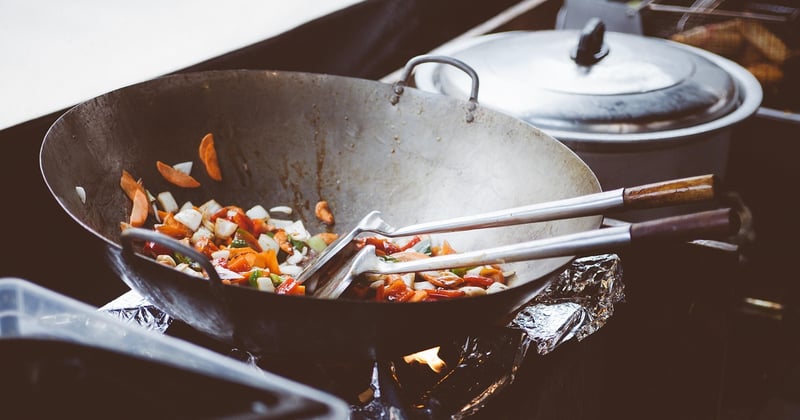
- Speed as a quality signal. A wok that never stops moving means high turnover, which means the ingredients didn't sit around.
- Five-flavour balance. Fish sauce for salt and umami, lime or tamarind for sour, palm sugar for sweet, chilies for heat, and often something bitter or herbal to close it out. A cook tasting from a ladle and adjusting is doing exactly that.
- One dish, one vendor. Specialization is the norm. A stall that makes nothing but banh xeo for twenty years will beat a stall making six things.
Which brings up an obvious problem with most listicles: they rank dishes, but street food is a transaction between a cook and a street corner at a specific hour. Ranking the dish without the context is like reviewing a song by reading the lyrics.
What is the most popular food in Southeast Asia?
Honestly? There isn't one, and any article that names a single dish is flattening half a billion people into a menu item. But if you force the question — and people do force it — you have to pick a metric, and the metric changes the answer.
By name recognition
Pad thai probably wins. It's the dish that made it onto menus in every capital on earth, and its international footprint is wider than any competitor's. Pho is a close second, boosted by the global spread of Vietnamese restaurants. Nasi goreng and satay carry Indonesia and Malaysia's flag abroad, though they're often served in restaurants rather than at the roadside where they belong.
By daily consumption
Completely different answer. Rice, in some form, every single day, in nearly every country. Then noodle soups, then grilled skewers. The dish eaten most often in Southeast Asia is also the one nobody photographs. It's rice with something on it, bought from a cart, eaten standing up.
By street presence
Grilled meat skewers. You'll find them from Chiang Mai to Jakarta, they cost almost nothing, and the smell travels further than any advertising. If street food had a lingua franca, it would be smoke.
The useful takeaway: when someone tells you the most popular dish in Southeast Asia, ask them which measure they used. It's rarely the one you assumed.
What is the most popular street food in Thailand?
Two answers, and the tension between them is instructive.
Pad thai is the diplomatic answer. It's what appears at the top of every visitor survey, it's what every tourist tries first, and it's what most Thai restaurants abroad are built around. It's also, frankly, not what most Thais are eating on a Tuesday night.
Som tam — green papaya salad, pounded in a clay mortar with lime, fish sauce, palm sugar and a frankly irresponsible amount of chili — is the everyday answer. Walk through any market in Isan or Bangkok and count the mortars. That's your ranking.
The dishes worth queuing for
- Khao soi in Chiang Mai: coconut curry broth, egg noodles, crispy noodle nest on top, pickled mustard greens on the side. The single best bowl I've eaten in Thailand, and I say that knowing full well how annoying it sounds.
- Moo ping: pork skewers marinated in coconut milk and fish sauce, grilled over charcoal. Two for the price of nothing. Order four.
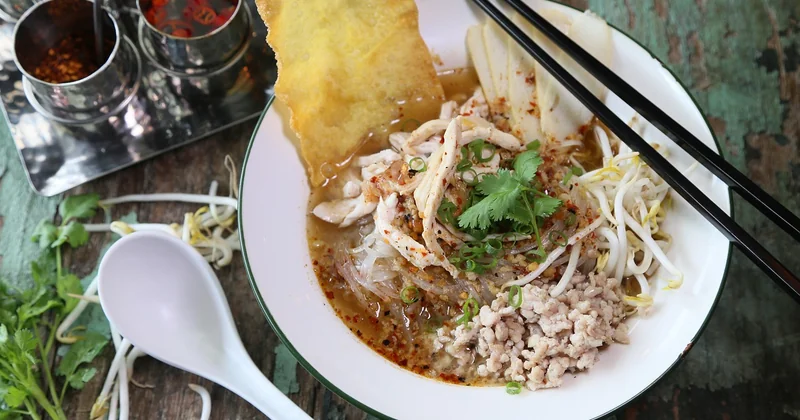
- Boat noodles: small, intense bowls, historically sold from boats on the canals, now mostly from shop-houses with plastic stools and no air conditioning. The broth is dark, thick, and tastes like it's been simmering since the previous decade.
- Jok: rice porridge, morning-only, usually with pork and a soft egg. The correct breakfast in Bangkok, and I will not be debating this.
One caveat worth stating plainly: pad thai varies enormously. The version served on Khao San Road is sweeter and milder than what you'll get from a neighborhood stall, which is often more sour and more pungent. Neither is "wrong," but the difference surprises people who think they know the dish.
What is the most popular Japanese street food?
Japan is an outlier in this conversation, and not for the reason people expect. Street food isn't woven into daily life the way it is in Bangkok or Hanoi; strict food-safety rules and a culture that leans toward sit-down eating mean the street scene is smaller. What exists is concentrated around festivals, markets and specific districts.
The two champions
Takoyaki — octopus dumplings, cooked in a molded iron pan, brushed with a sweet-savory sauce and topped with bonito flakes that move in the heat — is the most recognizable, and Osaka's Dotonbori district is its spiritual home. Yakitori is the most everyday: charcoal-grilled chicken skewers, sold from tiny counter stalls (often called yaki-tori-ya) where three or four people can sit at a time.
Beyond those two, okonomiyaki (savory cabbage pancake), taiyaki (fish-shaped cake with red bean filling), yakisoba and crepes in Harajuku round out the picture. If you're comparing: Japan's street scene rewards you with precision and consistency, while Southeast Asia's rewards you with variety and volume. Different pleasures entirely.
Which country has the best food in Southeast Asia?
You'll get a different answer depending on who you ask, and both camps are right.
Thailand has the deepest bench. The regional variation alone — southern curry with turmeric, northern nam prik dips, Isan salads — gives you months of eating without repeating a dish. Its street infrastructure is also the most developed: food is available at essentially every hour, on essentially every block.
Vietnam has the strongest claim to freshness. Herbs arrive at the table raw, broth is served clear and clean, and the balance leans more toward acid and aromatics than sugar and chili. Pho, bun cha, cao lau, banh mi: the variety comes from texture and broth technique rather than from spice layering.
Malaysia is the most underrated, and I'd argue the most rewarding for anyone who likes complexity. Malay, Chinese and Indian traditions overlap in a single hawker centre; a laksa broth and a roti canai can be eaten at the same table, from two vendors who've been there for decades. Indonesia has the widest raw diversity but gets less attention internationally, largely because nasi goreng and satay carry so much of the visibility burden.
A practical comparison
| Country | Signature street dish | What it does best | Typical street price point |
|---|---|---|---|
| Thailand | Pad thai, som tam | Availability and range | Low |
| Vietnam | Pho, banh mi | Freshness and balance | Very low |
| Malaysia | Laksa, satay | Cultural layering | Low to moderate |
| Indonesia | Nasi goreng, satay | Regional diversity | Low |
| Cambodia | Fish amok, num pang | Underrated broths | Very low |
| Japan (for reference) | Takoyaki, yakitori | Consistency | Moderate |
My own ranking, for what it's worth: Thailand for the sheer density of good eating, Vietnam for the meals I still think about, Malaysia for the ones that surprised me most. Ask me again next year and I might reshuffle the top two.
How to choose a street stall without ruining your trip
Look, most of the hygiene advice you read is either obvious or useless. Here's what actually matters.
Signals that hold up
- Volume. A stall with a queue is turning over ingredients fast. A stall with no customers at 7 p.m. is either terrible or brand new, and you don't want to be the test case.
- Cooking to order. If the dish hits the wok after you order it, you're eating something that was just heated to a temperature that kills most problems.
- A short menu. Four dishes, done thousands of times. Not thirty.
- Locals sitting down. Not just walking past. Sitting.
The one thing I'd tell you to actually avoid: raw herbs and ice from a source you can't verify, especially in hot weather. I learned this the unpleasant way in Krabi, and the memory has outlasted any meal I ate on that trip. If the ice looks cloudy and the stall is nearly empty, skip the drink and buy a sealed bottle instead.
What about halal, vegetarian or no-pork diets?
This gets almost no coverage in English-language food writing, which is a gap worth flagging. In Malaysia and Indonesia, halal is the default at most Malay and Indonesian stalls, and pork is confined to Chinese-run vendors. In Thailand and Vietnam, pork and fish sauce appear in a large share of dishes, so a vegetarian needs to ask directly — mai sai nam pla in Thailand, roughly "no fish sauce," is a phrase worth memorizing. In Vietnam, com chay is the term for vegetarian food, and Buddhist-run eateries are usually reliable.
The part nobody puts in the guidebook
The best meal I ate in Southeast Asia cost the equivalent of about two euros and took ninety seconds to prepare. It was a bowl of boat noodles from a woman in Chiang Mai who had been making the same broth for longer than I've been able to cook, and she didn't say a word to me beyond pointing at a stool. I sat there sweating, in a plastic chair with a broken leg, and understood that street food isn't a category of cuisine. It's a delivery system for culture that happens to be efficient, cheap and ruthlessly honest.
So when you go, skip the list. Stand on a corner at 6 a.m. and watch who's eating. The answer to "what's the best food in Southeast Asia" is being served right there, by someone who has never once thought of it as a ranking.