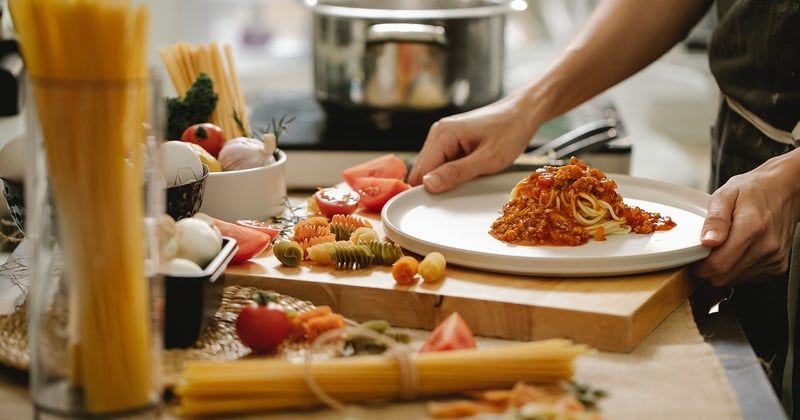
You're at a wedding in Palermo and someone puts a plate of pasta with sardines in front of you at 11 p.m. The nonna next to you explains, with genuine seriousness, that this is the "pasta del martedì" — but it's Saturday. Nobody around the table blinks. The dish is correct. You are the one who is confused.
That moment, repeated across a hundred cities, is what "food traditions around the world" actually means when you strip away the postcard version. It's not a list of exotic dishes. It's a set of decisions — what to eat, when, with whom, in what order — that a community made so long ago that the reasons have been folded into the practice itself. Most of the time, the people following them couldn't fully explain them. That's the whole point.
This article explains the food traditions you've seen described and never understood, and gives you the causal logic behind them: climate, scarcity, hierarchy, preservation, ritual. By the end, you should be able to look at almost any food custom and reconstruct why it exists.
Key takeaways
- Most food traditions exist for one of five reasons: climate, preservation, scarcity, social hierarchy, or religious ritual.
- "Strange" is a positional judgment — almost every custom is perfectly logical from the inside.
- Etiquette rules around a table are rarely about manners; they encode power structures.
- Food is one of the most reliable markers of cultural identity for diaspora communities.
- Globalization doesn't erase traditions — it moves them and forces them to defend themselves.
Why do food traditions exist in the first place?
The short answer: because a community needed to survive a specific environment and turned the solution into a habit, then into an identity.
Take preservation. Before refrigeration, anybody living somewhere with a hard winter had to convert summer food into something that would last until spring. Fermentation, salting, smoking, drying, burying in cold ground. That's why Korea has kimchi, why Scandinavia has gravlaks and rakfisk, why the Mediterranean has cured pork in a dozen regional forms, why Iceland buried shark meat in sand. What looks like culinary creativity is, in most cases, food chemistry applied to a climate problem.
The five causal drivers behind almost every custom
Whenever you encounter a tradition you don't understand, run it through this filter:
- Climate and seasonality — what grows and when, which determines the calendar of feasts.
- Preservation — how the community bought itself time between harvests.
- Scarcity and rationing — cuts, portions, and rules that distribute a scarce resource fairly (or unfairly).
- Social hierarchy — who eats first, who gets the best piece, who is served by whom.
- Ritual and meaning — the layer where food carries a message about the sacred, the dead, or the family line.
Most real traditions stack two or three of these. The Italian Sunday lunch is climate (seasonal produce), hierarchy (the grandmother presides), and ritual (the meal marks the week's end) simultaneously. That layering is why these customs are so resistant to change. Remove one layer and the whole structure wobbles.
"Strange" is a positional judgment, not a property of the food
Here's the thing I find most people get wrong. When you read a list of "weird food traditions," you're not reading about the food. You're reading about the distance between the eater and the observer.
I once watched a group of French colleagues genuinely recoil from the idea of an American peanut butter and jelly sandwich on white bread. Meanwhile, that same group considered a slice of head cheese (fromage de tête) a normal lunch. Neither tradition is stranger than the other. Both are efficient ways to use cheap protein. The "weird" label attaches to whichever one you didn't grow up with.
So when you're explaining a tradition — to a friend, to a client, in your own writing — the useful move is to skip the spectacle and go straight to the function. A fermented shark is not a curiosity. It's what happens when you have a surplus of shark, a lack of salt in some periods, cold soil, and a few months to kill.
How does food play a role in culture?
Food does four jobs in a culture, and only one of them is nutrition. The other three are what make traditions stick.
1. It marks who belongs
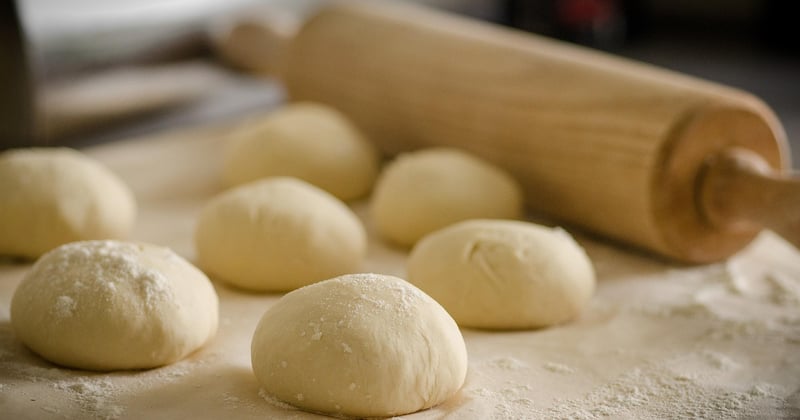
Every community has a dish that functions as a membership card. If you know how to prepare it correctly, you're in. If you don't, you're a guest, at best. This is why the "wrong" way of making a national dish can trigger more emotion than any political argument. Recipes are a form of transmission — the knowledge moves from hand to hand, not through a cookbook. When a grandmother teaches a grandchild the exact texture of a dough, she's transferring identity, not just technique.
2. It encodes social order
The rules of who eats what, when, and with which hand are almost never arbitrary. They're a visible map of the hierarchy. In many traditions, the eldest is served first. In others, the guest of honor gets the portion that signals respect. Certain seats at the table are reserved. Certain foods are only eaten by certain people, or only on certain days.
If you want to understand a culture's power structure, watch a family meal. You'll learn more in twenty minutes than in an hour of reading. The etiquette rules aren't decoration — they're the culture explaining itself.
3. It connects the living to the sacred and the dead
Almost every religious calendar is built around food. Fasting periods followed by feasts. Specific dishes that only appear at specific festivals. Offerings left for ancestors. The meal becomes the medium through which the community marks time and honors what it can't see.
4. It creates shared time
The simple act of sitting down together at a fixed hour is a social technology. It forces people to pause, talk, and renew the group. Cultures that protect the shared meal — the long Sunday lunch, the evening family dinner, the tea ritual — tend to have denser social fabric. Whether that's causal or coincidental is genuinely debated, but the pattern is hard to miss.
What are 5 examples of traditions?
Five traditions, each from a different causal driver, so you can see the logic in action.
| Tradition | Where | Primary driver | What it actually solves |
|---|---|---|---|
| Korean bansang (many small side dishes) | Korea | Seasonality + sharing | Distributes many small harvests across one meal; every diner shares from the center |
| Seder meal | Jewish communities worldwide | Ritual + memory | Transmits a historical narrative to children through food, questions, and sequence |
| Iftar breaking of the fast | Muslim communities | Religious ritual + community | Reinforces collective discipline; the shared meal marks the day's rhythm |
| Japanese table etiquette (order of service, chopstick taboos) | Japan | Social hierarchy | Makes relative status visible; prevents conflict through predictable form |
| Sunday roast | UK and family offshoots | Shared time + hierarchy | Anchors the week; assigns roles at the table |
Notice a pattern? None of these are primarily about flavor. They're about who sits where, what order things happen in, and what the group remembers.
I'll admit I didn't understand the Japanese chopstick taboos for years — I assumed they were just "manners." Then someone explained that sticking chopsticks upright in rice mimics funeral incense, which is why it's taboo at a normal meal. That single piece of context reorganized everything. The rule wasn't about politeness. It was about keeping death out of the living meal.
What are the 10 most popular foods in the world?
Popularity is slippery to measure, because "popular" depends on whether you're counting restaurant orders, home cooking, or supermarket sales. But there's a reasonable consensus on the dishes that show up across the widest range of cultures, and it maps nicely onto the causal logic above.
Roughly speaking, the most globally widespread dishes are:
- Rice in its many forms — the single most consumed staple worldwide
- Pizza — arguably the most globally adapted single dish
- Chicken preparations — fried, roasted, curried, grilled, in an enormous number of regional expressions
- Noodles — from ramen to pasta to pho, the same idea in a dozen forms
- Bread — flat or leavened
- Pasta — with its many regional shapes
- Soups and broths — the universal comfort food
- Dumplings — the same basic structure appears in Polish, Chinese, Nepali, Japanese, and Italian cooking
- Grilled and roasted meats — the universal method
- Tea as a beverage, with coffee close behind
What's interesting is why these ten dominate. They all hit at least two of the five drivers: they're cheap (scarcity), they travel well (climate adaptability), and they're infinitely variable (which lets them absorb local flavor and survive). Rice is the clearest case — it grows in a huge range of conditions, stores well, and pairs with almost anything. That's not a coincidence. It's a recipe for cultural ubiquity.
What are the 12 categories of food?
There isn't one universal taxonomy — different systems organize food differently depending on whether they're built for nutrition, agriculture, trade, or cooking. But the most commonly used classification splits food into twelve categories:
- Grains and cereals
- Legumes and pulses
- Vegetables
- Fruits
- Nuts and seeds
- Dairy
- Eggs
- Meat (red and white)
- Fish and seafood
- Fats and oils
- Herbs and spices
- Sweets and sweeteners (including sugar, honey, and syrups)
Some systems replace the last two with categories like "beverages" or "processed foods," so if you're using a specific framework for a project, check which version it follows. The twelve-category split matters for food traditions because every cultural cuisine is essentially a particular combination of these categories, weighted differently. A Nordic cuisine will lean heavily on fish, dairy, and preserved grains; a West African one on root vegetables, legumes, and complex spice blends. Different weights, same alphabet.
How do these traditions survive in a globalized world?
They mutate. That's not a failure — that's how they've always worked.
Every tradition you can name was once new. Pizza in its modern form is younger than the telephone. The "classic" dishes people now defend as ancestral were often standardized only a couple of generations ago, sometimes by a cookbook author or a food company trying to sell ingredients. What we call tradition is usually a frozen state of something that was once moving.
Diaspora communities accelerate this. When a family moves, the recipe keeps traveling — but the ingredients change. A dish that used a specific local pepper now uses a substitute. The result is a new variant, then a new tradition, sometimes within a single generation. I've watched a family recipe for a slow-cooked stew "evolve" three distinct times as it moved across borders — each version was claimed as authentic by the people making it.
What gets lost, and what doesn't
The thing that disappears most easily isn't the recipe. It's the context — the reason the dish was cooked on that specific day, in that specific order, with that specific person presiding. Recipes can be written down. Context has to be lived.
That's the honest risk. A dish can survive intact and still lose everything that made it a tradition.
The real point
If you take one thing from all of this, let it be the causal lens. Next time you encounter a tradition you don't understand — a specific order of serving, a strange pairing, a dish that seems to exist for no reason — resist the urge to file it under "quirky." Ask three questions instead: what did this community lack, what did it have too much of, and who was sitting where at the table?
The answers will almost always point to climate, scarcity, hierarchy, or memory. Which means that plate of pasta at 11 p.m. in Palermo wasn't a mistake. It was a community's accumulated answer to a problem you weren't around to see. You just got invited to eat the answer.