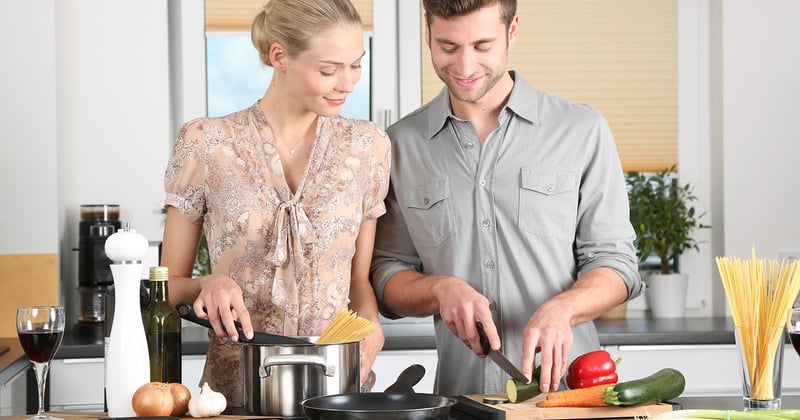
Two ingredients. Flour and eggs. That's the entire ingredient list for fresh pasta, and yet I've watched people turn it into a disaster three times in a single afternoon. The dough is too sticky, so they add flour. Now it's too dry, so they add water. Now it's a shaggy mess that won't come together, and they're convinced they're the problem.
The problem isn't them. It's that nobody tells you the ratio by weight, or what to do when the dough fights back. Here's the thing: making homemade pasta from scratch is genuinely easy once you know the handful of decision points that actually matter. This guide walks you through them step by step.
Key Takeaways
- Use 100 g of flour per egg as your base ratio, then adjust by feel, not by recipe.
- A 50/50 blend of "00" flour and semolina gives you tenderness and bite at the same time.
- Rest the dough 30 minutes minimum—this is not optional if you want it to roll smoothly.
- Fresh pasta cooks in 2 to 4 minutes, not the 10 minutes dried pasta needs.
- Salt the water generously, but skip the oil—it does nothing useful.
- Sticky dough is fixed with a little semolina, not more all-purpose flour.
How is pasta made from scratch, really?
Strip away the romance and fresh pasta is a simple sequence: make a dough, let it relax, roll it thin, cut it, boil it. Four steps. What separates a silk-smooth sheet from a ragged, tearing one lives entirely in the details.
The classic method is the well: pile your flour on a board, hollow out a crater, crack the eggs into it, and beat them with a fork while drawing flour in from the walls. It's satisfying and it works.
I'll be honest, though—I stopped using the well years ago. On a countertop, the walls collapse about one time in four for me, and you end up chasing egg across the board. A bowl does the same job with less drama. Purists will disagree. I'll take the bowl.
The two-ingredient base
Classic egg pasta is flour and eggs. Nothing else. Some recipes add a splash of olive oil or a pinch of salt; both are optional and neither will make or break you.
- 100 g of flour to 1 whole egg is the ratio I use. For a generous main course for one person, plan on about 100 g of finished dough.
- Eggs vary in size, and that's the variable nobody accounts for. A large egg weighs roughly 55 g; a small one closer to 45 g. Two eggs from different cartons can shift your hydration by 20%.
- That's why weight beats volume every time. A kitchen scale costs less than a decent bottle of wine and removes all the guesswork.
What is the best flour for homemade pasta?
Here's where most guides wave their hands and say "any flour works." Technically true. Practically unhelpful, because the flour you pick decides whether your pasta is tender, chewy, or prone to dissolving in the pot.
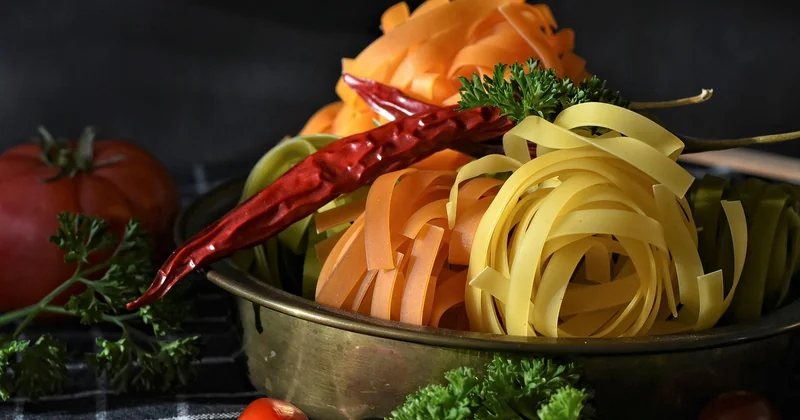
A quick comparison
| Flour type | Protein | What it does to your pasta | Best for |
|---|---|---|---|
| "00" flour | ~9–11% | Very fine, silky dough. Rolls paper-thin without tearing. | Egg pasta, stuffed shapes |
| Semolina (durum) | ~12–14% | Coarse, holds shape, gives a firm bite | Shaped pasta, orecchiette, cavatelli |
| All-purpose | ~10–11% | Workable, slightly less delicate | Everyday batches |
| Bread flour | ~12–13% | Chewy, springy, resists rolling thin | Nothing I'd use it for here |
My go-to is half "00" and half fine semolina. The "00" gives that soft, elastic sheet you can see light through; the semolina keeps the cooked pasta from turning to mush and adds a faintly nutty flavor. Since I started blending, my tagliatelle holds its shape for a full two minutes longer in the water than the all-"00" version did.
Semolina is also the answer to a problem you'll hit ten minutes from now: sticky dough. Keep a small bowl of it within reach and dust as you go.
Step-by-step: making the dough
Weigh your flour into a bowl. Add the eggs. Break the yolks with a fork and start stirring.
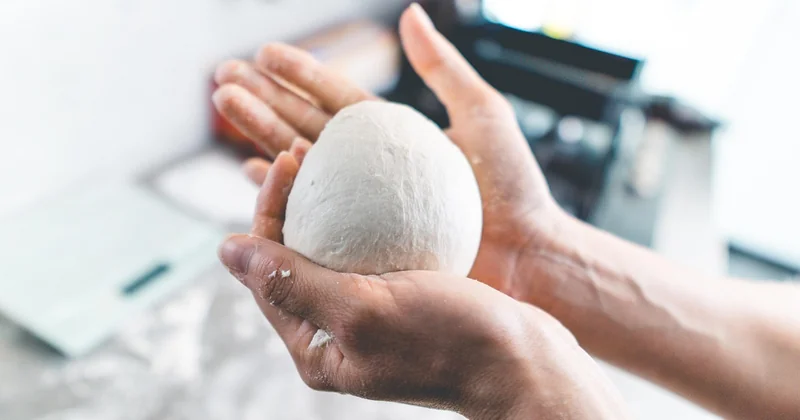
For the first thirty seconds it looks hopeless—dry shards, wet patches, no cohesion. Keep going. Once it forms a rough ball, turn it onto the counter and knead.
Kneading, and why resting matters more
Knead for 8 to 10 minutes. You're looking for a dough that's smooth, slightly warm, and springs back when you press a finger into it. If it's tacky, dust the counter with semolina. If it crumbles and won't hold, wet your hands and knead again.
Then wrap it in plastic or cover it with an inverted bowl, and walk away for at least 30 minutes. The gluten you just worked up needs time to relax. Skip this and the dough will snap back every time you roll it, refusing to stretch thin. I learned that the hard way—my first attempt at lasagne sheets came out uneven and thick in the middle, and I blamed the rolling pin.
Rolling: machine or by hand
No machine? A rolling pin works fine. It takes longer and you'll need to be patient, but the result is indistinguishable once it's cut. With a machine, pass the dough through progressively thinner settings—start at the widest and work down one notch at a time, dusting with semolina between passes.
Roll until you can just about see your hand through the sheet. That's your target.
How long to cook fresh pasta al dente?
Two to four minutes. If it's a stuffed shape, give it five to six. That's it—far shorter than dried pasta. Fresh pasta is already hydrated, so it has nothing to absorb.
Boil it in water salted like the sea—roughly 10 g of salt per liter. Pull a piece out a minute before you think it's ready and bite it. It should be tender with a slight resistance at the core, no chalkiness.
One caveat that catches people out: very thin sheets cook in barely 90 seconds. Set a timer the first few times. I've overcooked more fresh pasta than I'd like to admit, and there's no rescuing it.
How do I make homemade pasta sauce?
The pasta takes minutes; the sauce should keep pace. A few that work with what's already in your kitchen:
- Butter and sage—melt 60 g butter, add a handful of sage leaves, cook 90 seconds until nutty. Toss the drained pasta straight into it with a spoonful of the cooking water.
- Garlic and oil—warm sliced garlic in olive oil slowly, add chili flakes, finish with lemon zest.
- Tomato base—a tin of good tomatoes, half an onion, olive oil, 20 minutes on low.
- A carbonara built on egg yolks and pecorino, no cream, ever.
The technique matters more than the ingredients: as you drain the pasta, keep a ladle of the starchy cooking water. Add it to the sauce. It emulsifies everything into something glossy and clinging rather than watery.
What goes wrong, and how to fix it
The dough tears when I roll it
It's under-rested or too dry. Re-wrap it and give it another 20 minutes, then dust with semolina and go slower through the settings.
My pasta sticks to the counter
Too much moisture. Dust the surface with fine semolina before each pass and avoid brushing on extra water.
It falls apart in the boiling water
Usually under-kneaded or rolled too thin. Give the next batch two extra minutes of kneading.
Fresh pasta is forgiving in a way that bread is not. It has no yeast, no proofing schedule, no dramatic rise to ruin. The worst batch you make will still be edible—and the second one will be better.